The best beaches in Cape Town at a glance
The first thing to understand about Cape Town's beaches is that geography changes the experience dramatically. The Atlantic Seaboard — Clifton, Camps Bay, Llandudno and the beaches around Bakoven — is spectacular, exposed and usually very cold for swimming. False Bay, on the other side of the Cape Peninsula, tends to have more comfortable water temperatures and a different atmosphere.
There are dozens of beaches around Cape Town, so trying to see them all would be pointless. Instead, choose according to what you actually want from a beach day: swimming, surfing, photography, sunset, a long walk, restaurants nearby or simply somewhere beautiful to sit for a few hours.
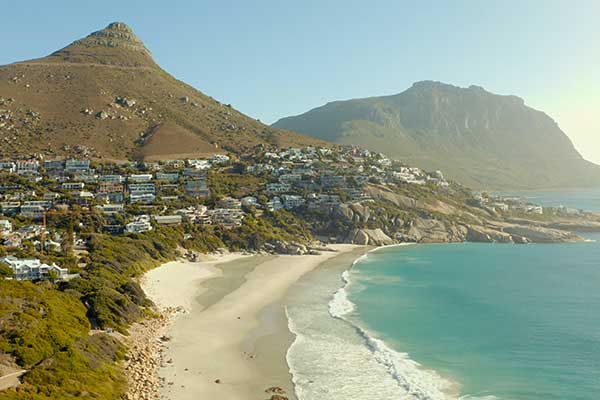
Atlantic Seaboard · 4 beaches
Clifton
White sand, huge granite boulders and one of Cape Town's most iconic coastal settings. Go for scenery, sunbathing and sunset rather than warm swimming.
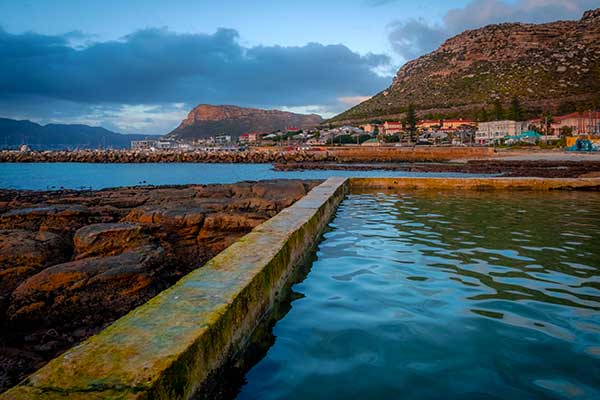
Atlantic Seaboard · City beach
Camps Bay
The easiest beach to combine with lunch, drinks and a sunset along Victoria Road. Beautiful, lively and convenient, but the Atlantic water is cold.
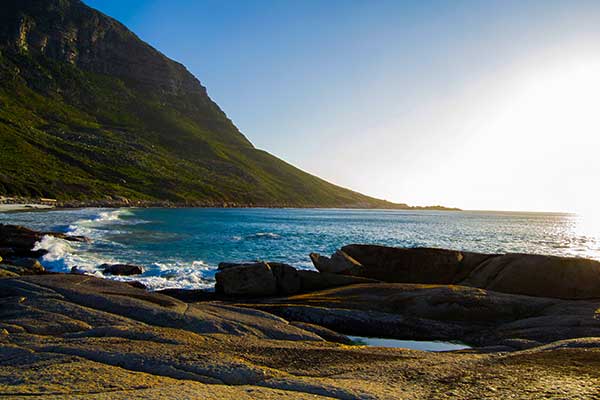
Atlantic Seaboard · Quiet
Llandudno
A beautiful cove surrounded by granite rocks and natural vegetation. More secluded than Camps Bay and Clifton, with fewer facilities and a wonderfully wild feel.
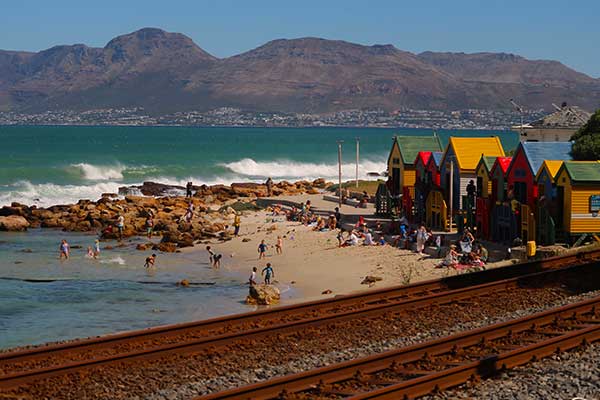
False Bay · Surf beach
Muizenberg
Long, lively and closely associated with Cape Town's surf culture. A practical choice for beginners, swimming and colourful beach photography.
False Bay · Simon's Town
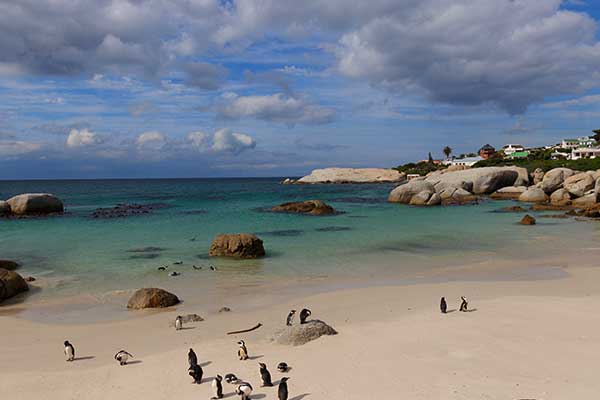
Boulders Beach
The famous African penguin colony makes this one of Cape Town's most distinctive beach stops. The sheltered coves also make the water more inviting than the Atlantic side.
False Bay · Long beach
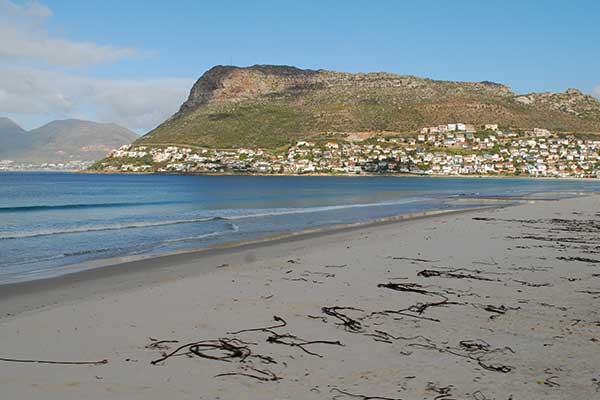
Fish Hoek
A long False Bay beach with a more relaxed local atmosphere. Good for walking, swimming and combining with Kalk Bay and Simon's Town.
Cape Peninsula · Wild coast
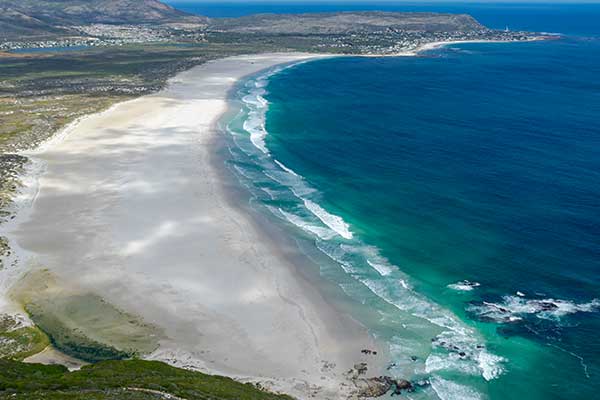
Noordhoek
A huge, windswept beach that feels completely different from the city beaches. Come for long walks, dramatic scenery and sunsets rather than casual swimming.
Bakoven · Small cove
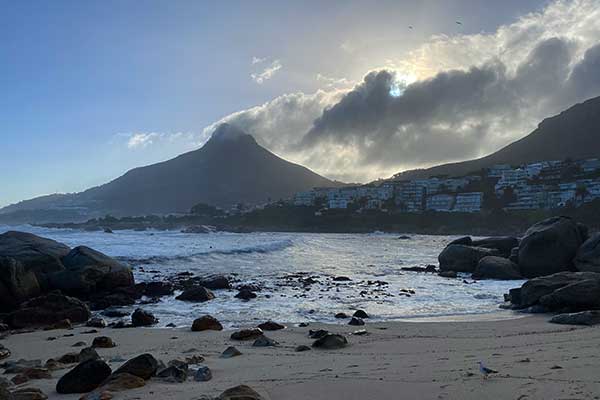
Beta Beach
A small, scenic cove close to Camps Bay. A useful alternative when you want the Atlantic Seaboard scenery without the scale and bustle of Camps Bay.
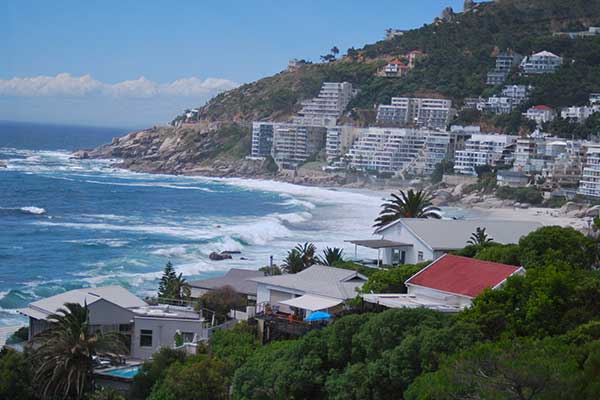
Atlantic Seaboard · Surf beach
Glen Beach
A smaller beach tucked between granite rocks near Camps Bay. It has a more intimate feel and is popular with surfers when conditions are right.
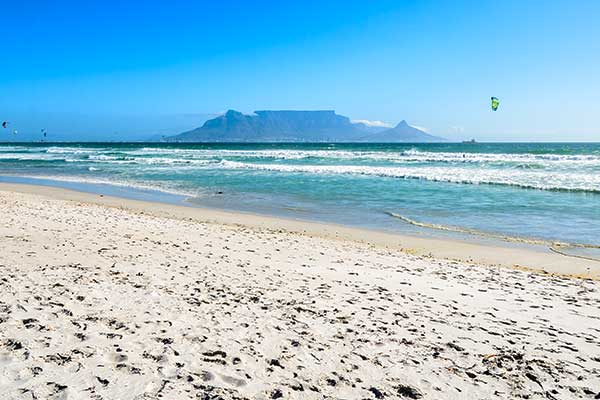
Table Bay · Wind sports
Bloubergstrand
The beach to choose when the view matters as much as the sand. On a clear day, Table Mountain rises dramatically across Table Bay, while the wind attracts kite and windsurfers.
The Cape Town beach rule
Don't choose a beach based only on photographs. Check which side of the peninsula you're visiting, what the wind is doing, whether you actually want to swim and how much driving you're willing to do. A spectacular beach can be a disappointing choice if you're expecting warm water or a restaurant five minutes away.
Clifton Beaches — four coves, one iconic coastline
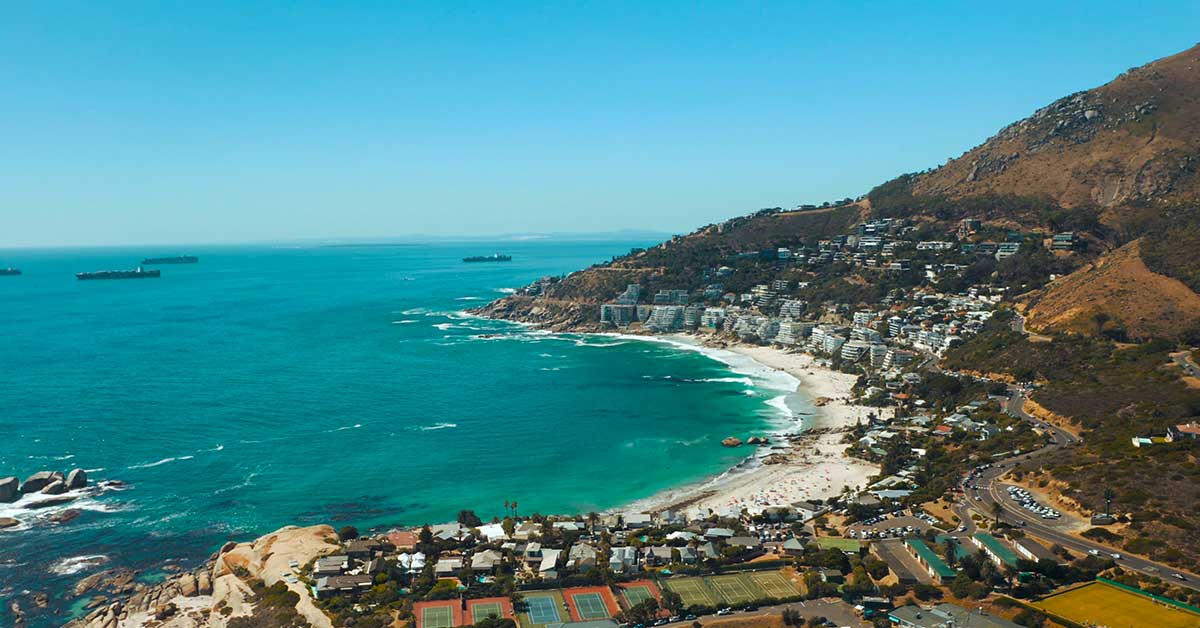
Clifton isn't one beach. It's four separate sandy coves divided by granite boulders, and that distinction matters because each has a slightly different atmosphere. Clifton 1st, 2nd, 3rd and 4th sit along the Atlantic Seaboard between Bantry Bay and Camps Bay, protected from some of Cape Town's famous south-easterly wind.
Clifton 4th is the one most visitors recognise from photographs and is generally the busiest of the four. It has broad white sand, huge granite rocks and an almost cinematic view of the Atlantic. Clifton 2nd and 3rd can feel more relaxed depending on the day, while 1st tends to have a slightly different crowd and atmosphere.
The catch is the water. This is the Atlantic side of Cape Town, and it is cold. Very cold, depending on the season and your tolerance. You can absolutely swim, and people do, but don't arrive expecting Mediterranean temperatures.
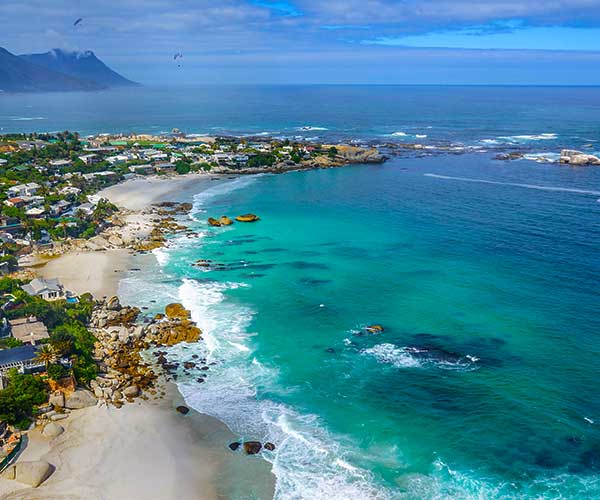
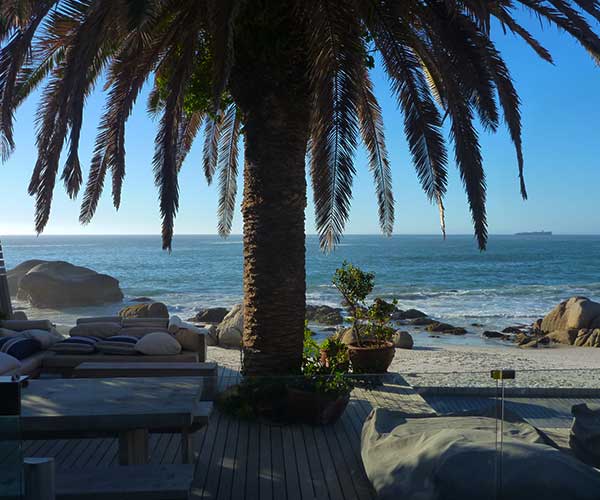
Clifton is a series of four beaches separated by granite outcrops, with Clifton 4th generally being the busiest and most photographed.
When to go to Clifton
Summer afternoons can be beautiful, but they can also bring strong wind elsewhere along the coast. Clifton's position makes it one of the more sheltered Atlantic options. Go earlier in the day if you want a quieter experience, or arrive later for sunset and stay into the evening if conditions are comfortable.
Clifton — Key Facts
- LocationAtlantic Seaboard · between Bantry Bay and Camps Bay
- Best forScenery · sunbathing · sunset · photography
- WaterCold Atlantic water
- BeachesFour separate coves
- FacilitiesLimited directly on the beach · restaurants nearby
- ParkingLimited · arrive early in busy periods
Camps Bay Beach — the classic Cape Town beach day
If you have only one afternoon for a classic Cape Town beach experience, Camps Bay is one of the easiest places to build into your itinerary. The beach sits directly below the Twelve Apostles, with palm trees, a broad strip of sand and Victoria Road running immediately behind it.
What makes Camps Bay different from Clifton is convenience. You can spend an hour on the sand, walk across the road for lunch, get an ice cream, come back for sunset and then have dinner without moving the car. It is much more of a complete neighbourhood experience than a secluded beach.
The beach itself is beautiful, but the Atlantic is cold. If you want to swim without committing to icy water, the Camps Bay tidal pool at the southern end of the beach is worth knowing about. Tidal pools are also useful when ocean conditions make an open-water swim less appealing.
Best combination
Pair Camps Bay with Clifton earlier in the day, then stay around Camps Bay for sunset and dinner. The two are close enough that you don't need to dedicate separate days to them.
Is Camps Bay too touristy?
It is certainly busier and more developed than Llandudno or Noordhoek. But that is precisely why it works for some travellers. If your ideal beach day includes cafés, restaurants, easy access and a dramatic setting, the development is an advantage rather than a problem.
Llandudno Beach — beautiful, quieter and wild
Llandudno feels surprisingly removed from the rest of Cape Town despite being relatively close to Camps Bay. The beach sits below a residential hillside, surrounded by granite boulders, natural vegetation and the dramatic peaks of the Atlantic coastline.
This is the beach I would choose when the scenery matters more than convenience. There are no rows of restaurants directly behind the sand and the facilities are much more limited than at Camps Bay. That gives Llandudno a quieter, more natural character.
The beach is also popular with surfers when conditions are suitable. As with other Atlantic beaches, however, the water is cold and ocean conditions can change quickly. This is not the place to assume that a calm-looking morning means the sea will remain calm all day.
What Llandudno doesn't have
Llandudno's lack of commercial development is part of its appeal. Don't arrive expecting a beachfront restaurant strip, lots of shops or endless facilities. Bring what you need for your beach stay and treat the location as a scenic escape rather than a resort.
Muizenberg Beach — surfing, swimming and colourful huts
Cross the peninsula to False Bay and the atmosphere changes completely. Muizenberg is long, lively and strongly associated with Cape Town's surf culture. The colourful Victorian-style bathing huts have become one of the city's most recognisable beach images, but the real reason to come is the combination of sand, surf and a more relaxed beach-town atmosphere.
Muizenberg is particularly well known as a beginner-friendly surfing destination. Surf schools operate along the beach and the long shoreline gives the area a very different rhythm from the compact Atlantic coves.
The water is generally more comfortable than on the Atlantic side, although "warmer" is relative in Cape Town. Conditions, season and weather still matter, so don't expect tropical water simply because you're on False Bay.
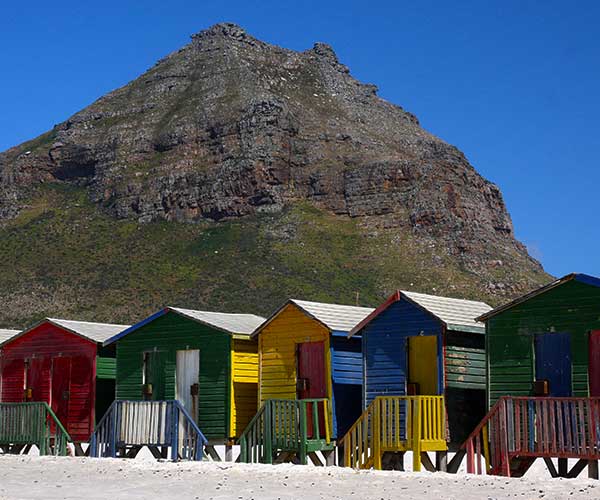
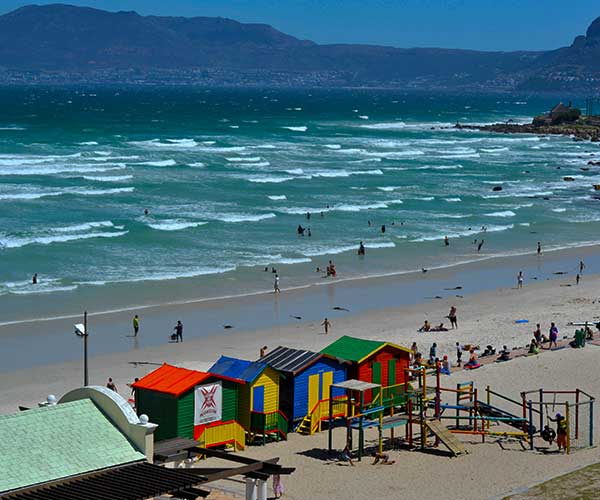
Muizenberg combines a long sandy beach, surf culture and the colourful bathing huts that have become synonymous with Cape Town.
What to do around Muizenberg
Don't treat Muizenberg as a beach-only stop. Combine it with a drive through Kalk Bay and St James, where the coastline becomes a sequence of small coves, tidal pools, cafés and colourful seaside architecture.
It also makes sense as part of a longer Cape Peninsula day. You can start around Muizenberg, continue through Kalk Bay and Fish Hoek, visit Boulders and then continue towards Cape Point.
Boulders Beach — penguins and sheltered water
Boulders is the beach everyone has seen on Instagram: granite boulders, clear False Bay water and African penguins wandering around the shoreline. But it is important to understand that Boulders is not simply a free beach where you arrive and sit next to penguins.
The Boulders section of Table Mountain National Park includes several beaches, a designated penguin viewing area and boardwalks. The viewing areas exist to let visitors see the endangered African penguins while keeping the animals protected. A conservation fee applies to the site, and visitors should never touch or feed the penguins. :contentReference[oaicite:1]{index=1}
There is also a swimming area, and the large granite boulders shelter the coves from some wind, currents and larger waves. This makes Boulders a very different swimming experience from the exposed Atlantic beaches around Clifton and Camps Bay. :contentReference[oaicite:2]{index=2}
Important at Boulders
The penguins are wild animals, not props for photographs. Stay on designated paths and viewing areas, keep your distance and never touch or feed them. The penguin colony is protected and visitor behaviour matters.
Boulders Beach — Key Facts
- LocationSimon's Town · Table Mountain National Park
- Best forAfrican penguins · sheltered swimming · photography
- WaterGenerally warmer than Atlantic Seaboard beaches
- EntryDaily conservation fee applies
- ParkingLimited · arrive early in peak periods
- Wildlife ruleNever touch or feed the penguins
Can you actually swim with the penguins?
This is one of those travel myths that needs a little clarification. Boulders is famous for its penguin colony, but visitors should not treat the birds as swimming companions. There are designated areas for viewing the colony and separate beach areas where visitors can swim. The whole point of the protected infrastructure is to allow people and wildlife to share the area without turning the penguins into an attraction you can physically interact with.
Fish Hoek Beach — one of False Bay's classic beaches
Fish Hoek is one of the more practical beaches on this list. It is long, sandy and backed by the town, making it easier to combine a beach stop with food, shops and a walk along the coastline.
The beach is on False Bay, so the water is generally more approachable than on the Atlantic Seaboard. Families and swimmers are a common sight, while the long shoreline also makes it good for walking rather than simply lying on the sand.
Fish Hoek is also useful geographically. If you're exploring the Cape Peninsula, it sits naturally between Muizenberg and Simon's Town, meaning you can include it without creating a huge detour.
A good day-trip route
Muizenberg → Kalk Bay → Fish Hoek → Boulders → Simon's Town. This is one of the easiest ways to experience several completely different Cape Town coastal environments in one day.
Noordhoek Beach — enormous, wild and cinematic
Noordhoek is where you go when you want to feel like you've left the city. The beach is enormous compared with the compact coves of Clifton and Camps Bay, with a long sweep of sand backed by mountains and open coastal landscape.
It is particularly good for walking and photography. On a clear evening, the combination of mountains, huge beach and changing Atlantic light can feel almost unreal.
Swimming is not the main reason to come here. The beach is exposed, the ocean can be powerful and conditions can change. If your priority is an easy swim, choose a more suitable beach or tidal pool. If your priority is space, scenery and a long coastal walk, Noordhoek becomes much more interesting.
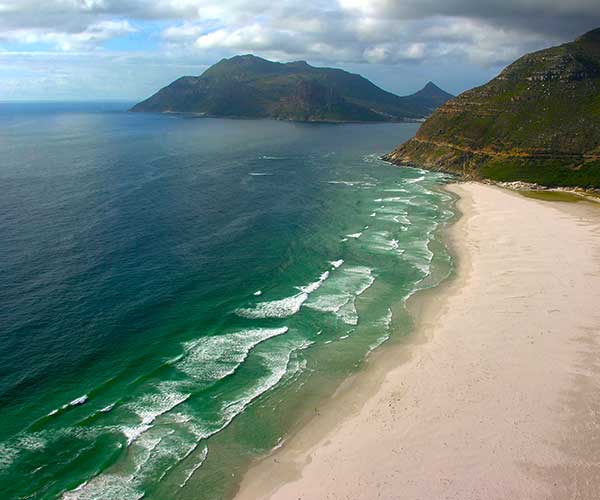
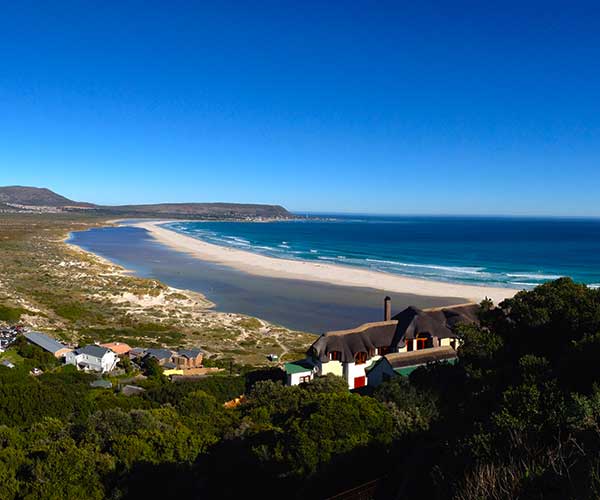
Noordhoek is about scale: a huge beach, dramatic mountains and the feeling of open coastline just outside Cape Town.
Combine Noordhoek with Chapman's Peak
If you're already driving towards the Cape Peninsula, Noordhoek makes an excellent stop before or after Chapman's Peak. The route is one of the most scenic drives around Cape Town, and the beach gives you somewhere to slow down after spending time on the road.
Beta Beach — a small escape near Camps Bay
Beta Beach is one of the smaller beaches around Bakoven, just south of Camps Bay. It doesn't have the enormous sweep of Camps Bay or the four separate coves of Clifton, but that is exactly why some travellers prefer it.
The beach is surrounded by granite rocks and has a sheltered, intimate feeling compared with the larger beaches nearby. It can be particularly appealing when you want to sit by the Atlantic, watch the light change and avoid the feeling of being in the middle of Cape Town's main beach strip.
There are fewer facilities directly on the beach, so bring anything you need. Think of Beta as a scenic cove rather than a full-service beach destination.
Best for
Beta Beach works particularly well as a short stop between Camps Bay and the Twelve Apostles, especially if you're exploring the Atlantic Seaboard by car and want somewhere quieter for a while.
Glen Beach — small, scenic and popular with surfers
Glen Beach sits beside Camps Bay but feels considerably smaller and more tucked away. Large granite boulders frame the sand, and the beach is known for its surf culture as well as its scenic position.
It is a good example of why Cape Town's beach geography is so interesting: two beaches can be practically next door to each other while offering very different experiences. Camps Bay is built around a large public beachfront and restaurant strip; Glen feels more intimate and coastal.
Surf conditions depend on the day, and the Atlantic remains cold. If you aren't surfing, the beach is still worth knowing about for its scenery and proximity to Camps Bay.
Bloubergstrand — the Table Mountain view
Bloubergstrand is slightly different from the other beaches on this list because the main reason to visit is not necessarily the beach itself. It is the view.
Looking south across Table Bay, you get one of the classic perspectives of Cape Town: Table Mountain rising across the water, with the city and coastline stretching around it. On a clear day, this can be one of the best places for that unmistakable Cape Town photograph.
The area is also strongly associated with wind sports, particularly kitesurfing and windsurfing. That means the same wind that can make some beach days uncomfortable is exactly what makes Blouberg attractive to water-sports enthusiasts.
Bloubergstrand — Key Facts
- Best forTable Mountain views · photography · kitesurfing
- LocationTable Bay · north of central Cape Town
- WaterCold Atlantic water
- WindOften windy · ideal for wind sports
- Best photoTable Mountain across the bay
- AtmosphereOpen, spacious and less sheltered
Which Cape Town beach is right for you?
There isn't one objectively perfect beach in Cape Town. The best choice depends on what you want from the day. The biggest mistake is choosing a beach because you've seen one beautiful photograph without considering its location, water temperature or facilities.
| Beach | Best for | Water | Atmosphere | What to know |
|---|---|---|---|---|
| Clifton | Scenery, sunbathing, sunset | Cold | Iconic, lively | Four beaches; limited parking |
| Camps Bay | Beach + restaurants | Cold | Busy, social | Best facilities and dining nearby |
| Llandudno | Quiet scenery, surfing | Cold | Secluded, natural | Few facilities |
| Muizenberg | Surfing, swimming | More comfortable | Lively, relaxed | Great surf-school scene |
| Boulders | Penguins, swimming | More comfortable | Wildlife-focused | Conservation fee; protected colony |
| Fish Hoek | Swimming, walking | More comfortable | Local, relaxed | Long beach; False Bay |
| Noordhoek | Long walks, photography | Cold | Wild, spacious | Not primarily a swimming beach |
| Beta Beach | Quiet coves, sunset | Cold | Small, intimate | Limited facilities |
| Glen Beach | Surfing, scenery | Cold | Small, relaxed | Close to Camps Bay |
| Bloubergstrand | Table Mountain views, kitesurfing | Cold | Open, windy | Best skyline perspective |
Can you swim in Cape Town?
Yes — but swimming in Cape Town requires a little more thought than simply choosing the beach that looks prettiest.
The biggest difference is between the Atlantic Ocean and False Bay. Clifton, Camps Bay, Llandudno and other Atlantic beaches are exposed to cold ocean water. False Bay beaches such as Muizenberg, Fish Hoek and Boulders generally offer more comfortable swimming temperatures.
That doesn't mean every False Bay beach is automatically safe or calm. Currents, waves, wind, rocks and changing weather all affect conditions. Always pay attention to local signs, lifeguards and warnings rather than judging the ocean only from the sand.
Never ignore beach conditions
A beach can look perfectly calm while conditions in the water are very different. Swim only where and when conditions allow, stay within designated swimming areas where provided, and follow lifeguard instructions. If you are unsure, don't enter the water.
What about shark safety?
Cape Town is one of the places where ocean safety conversations can include shark monitoring, particularly around False Bay. This shouldn't be treated as a reason to avoid the coastline, but it is another reason to pay attention to local information and beach signage. Conditions and monitoring systems can change, so check current local guidance on the day you plan to swim.
Best time to visit Cape Town beaches
Cape Town's beach season is closely linked to its summer weather. December to February generally brings long, bright days and is the classic period for beach trips, although it also brings more visitors and can bring strong winds.
March and April can be particularly pleasant if you want warmer weather with a slightly quieter atmosphere. The days remain long enough for beach time and sunsets, while the city can feel less crowded than during the peak summer holiday period.
May to August is Cape Town's winter period. This is not the obvious choice for a traditional beach holiday, but the coastline can still be spectacular. Expect more changeable weather, cooler temperatures and a greater chance of rain. On clear winter days, however, the beaches can be almost empty.
September to November brings the transition into spring. The weather becomes increasingly suitable for outdoor days, and the landscape around the Cape Peninsula can look particularly beautiful as vegetation comes back to life.
For the best beach weather
Summer is the safest choice if your trip revolves around beach time. If beaches are only one part of a wider Cape Town itinerary, the shoulder seasons can give you a better balance between weather, crowds and sightseeing.
Practical beach tips
1. Don't underestimate the sun
Cape Town's air can feel pleasantly cool while the sun remains extremely strong. Bring sunscreen, sunglasses and water, especially if you're walking along beaches such as Noordhoek or spending several hours outdoors.
2. Check the wind
The Cape is famous for its wind, and it can completely change a beach day. A beach that looks perfect on a photograph can become uncomfortable when the wind picks up. This is one reason sheltered coves such as Clifton can be useful on certain days.
3. Don't assume the Atlantic is warm
This is probably the biggest expectation adjustment for first-time visitors. The water around the Atlantic Seaboard is cold. If warm-ish swimming matters to you, look towards False Bay beaches instead.
4. Arrive early at popular beaches
Clifton, Camps Bay and Boulders can become busy, particularly during summer and holiday periods. Parking can also be limited. At Boulders specifically, SANParks recommends arriving early because parking is limited during peak summer months. :contentReference[oaicite:3]{index=3}
5. Keep valuables out of sight
As with any busy tourist destination, don't leave phones, cameras or bags unattended on the sand. If you're travelling by car, avoid leaving valuables visible inside the vehicle.
6. Pack for more than one temperature
A Cape Town beach day can involve bright sun, cold water and strong wind within the same few hours. A light layer, towel, sunscreen and plenty of water are useful even in summer.
7. Give yourself time to drive
The beaches are spread around a large coastline. Clifton and Camps Bay are easy to combine, while Muizenberg, Fish Hoek and Boulders naturally form another cluster. Noordhoek and the beaches towards Cape Point deserve their own time rather than being squeezed between unrelated city activities.
Cape Town's beaches are not really about finding one perfect strip of sand. They're about choosing the right coastline for the day — Atlantic drama, False Bay swimming, surf, wildlife, long walks or that last light over the ocean. Travel notes, September 2026
Cape Town beach FAQ
What are the best beaches in Cape Town?
The answer depends on what you want. Clifton and Camps Bay are iconic Atlantic Seaboard choices, Llandudno is quieter, Muizenberg is associated with surfing and swimming, Boulders is famous for its African penguins, Fish Hoek works well for swimming and walking, and Noordhoek is ideal for long coastal walks and dramatic scenery.
Which Cape Town beach has the warmest water?
False Bay beaches generally have more comfortable water temperatures than the Atlantic Seaboard. Muizenberg, Fish Hoek and Boulders are therefore better choices if swimming temperature is important to you.
Can you swim at Clifton Beach?
Yes, people swim at Clifton, but the Atlantic water is cold. Clifton is particularly popular for sunbathing, scenery and the sheltered setting of its four coves.
Where are the penguins in Cape Town?
The famous African penguin colony is at Boulders in Simon's Town. It is part of Table Mountain National Park and has designated viewing boardwalks and protected areas. A conservation fee applies. :contentReference[oaicite:4]{index=4}
Is Muizenberg good for beginner surfers?
Yes. Muizenberg is one of Cape Town's best-known surfing beaches and has an established surf-school scene, making it a popular place to start learning.
Which beach is best for sunset?
The Atlantic Seaboard is particularly good for sunset because it faces west. Clifton, Camps Bay and Llandudno are all strong options, while smaller beaches around Bakoven can provide a quieter atmosphere.
Is Boulders Beach free?
No. Boulders is within Table Mountain National Park and a daily conservation fee applies to the site. Current fees can change, so check the official SANParks information before visiting. :contentReference[oaicite:5]{index=5}
How many beaches are there in Cape Town?
Cape Town Tourism describes the city as having dozens of beaches spread across the West Coast, Cape Peninsula and False Bay. The exact number depends on how individual stretches and smaller beaches are counted. :contentReference[oaicite:6]{index=6}