How to choose the right island for your style
Most travellers make one of two mistakes. The first is defaulting to the most famous option — Nusa Penida — without realising it's a rugged, difficult island with rough roads and real physical demands, not a lazy beach day. The second is spending too long in Bali and running out of time to go anywhere else, then rushing a day trip somewhere and coming back disappointed.
Here's the honest framework for choosing:
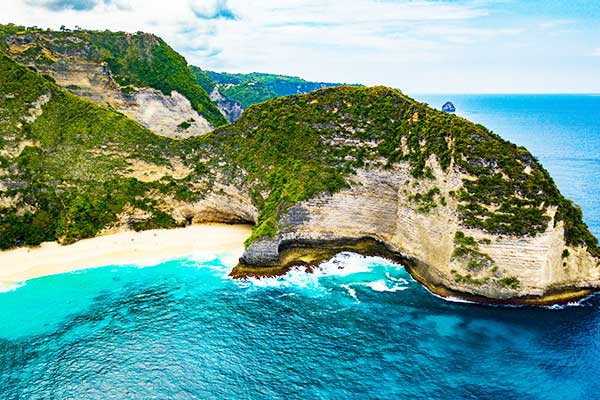
45–50 min · ~$20–30 return
Nusa Penida
The most dramatic island near Bali. Go for the photography, the manta rays and the diving. Don't expect beach relaxation — it's an adventure island, not a resort.
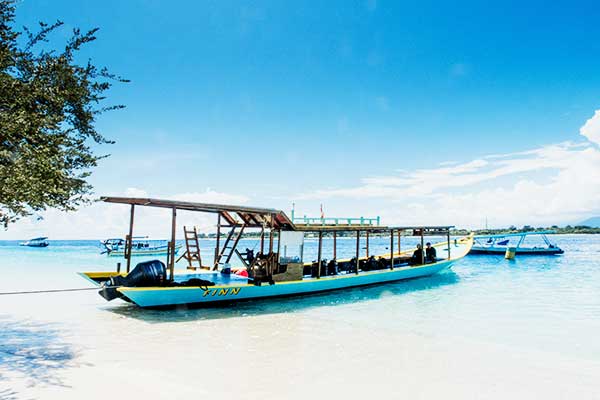
2–3 hours · ~$25–50 return
Gili Islands
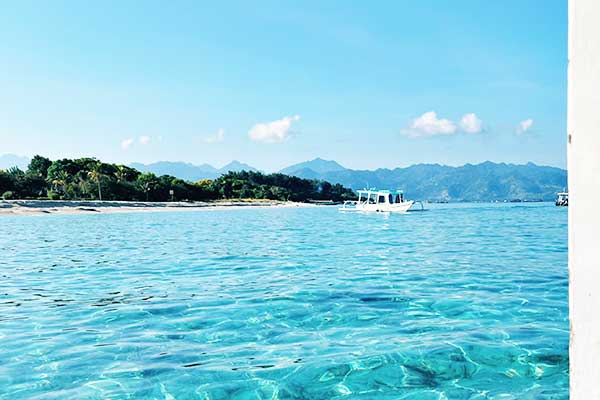
No cars, no motorbikes. Three islands with three very different atmospheres — party, balance, or silence. The water looks like the Maldives and turtles swim next to the beach.
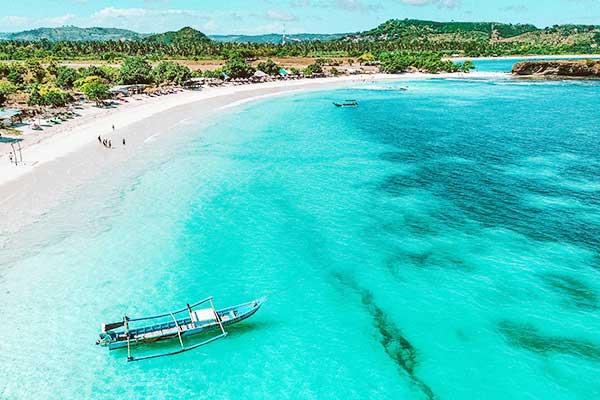
2 hr boat or 25 min flight · ~$20–50
Lombok
Bali's better-looking, less-crowded sibling. Mount Rinjani, world-class surf, beaches that embarrass Bali, and a slower pace that feels like Southeast Asia used to.
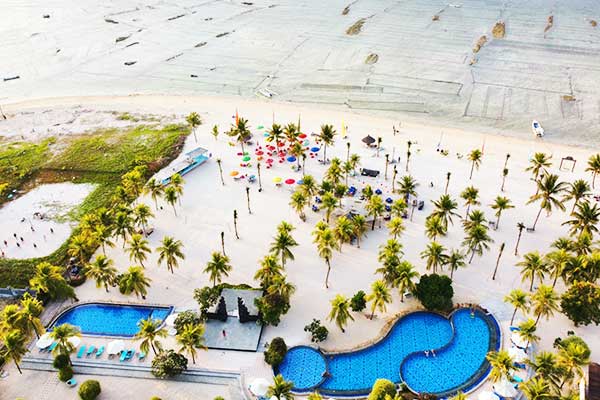
30–45 min · ~$25–35 return
Nusa Lembongan
The closest proper island escape. Yoga retreats, surf breaks, mangroves, and a relaxed atmosphere that feels like the Bali of fifteen years ago.
Nusa Penida — dramatic cliffs, world-class diving, honest warnings
Nusa Penida is the most dramatic island near Bali and its profile has risen exponentially. It's about 45 minutes from Bali by boat, and boasts Kelingking Beach, whose sharp cliff view is one of the most photographed in Indonesia. The other iconic beach option is Diamond Beach, on the eastern side. Angel's Billabong is a natural infinity pool carved into the cliff rocks. Broken Beach is a circular cove with a natural arch.
But here's what most guides don't tell you: Nusa Penida is a demanding island. The roads are rough, the distances between attractions are significant, and the ocean here is genuinely dangerous in places. Only swim at Crystal Bay, Atuh Beach, and Gamat Bay — these are the safest spots for swimming. Broken Beach swimming is strictly prohibited due to strong undercurrents, and Angel's Billabong is safe only at low tide.
2026 Update: Kelingking Beach
Bali's governor ordered the metal viewing tower at Kelingking demolished in November 2025, and as of early 2026 it's being slowly dismantled. The T-Rex formation is still there and still incredible, but the tower affects the classic silhouette shot. None of that should stop you from going — the cliff is still one of the most extraordinary things you'll see in Southeast Asia.
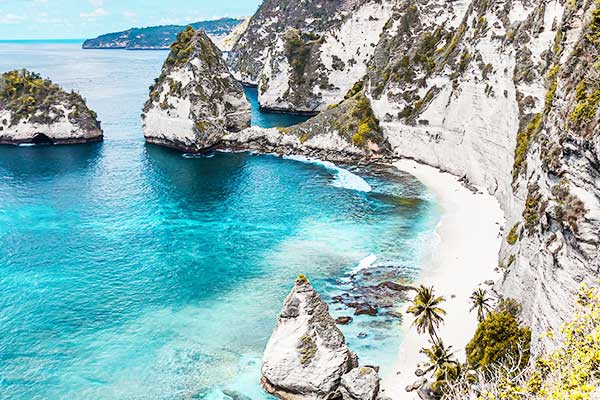
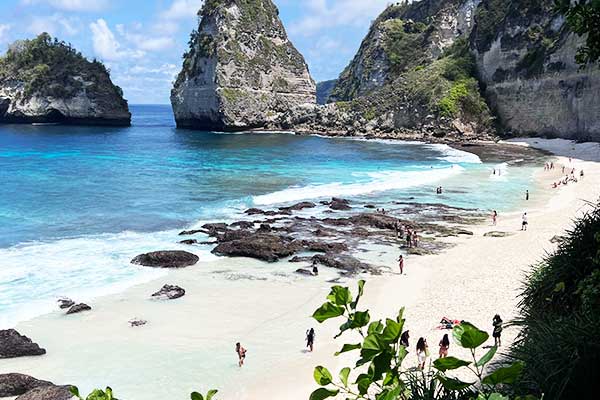
Kelingking Beach from the viewpoint, and Crystal Bay — one of the few spots on Nusa Penida where the water is genuinely safe for swimming.
How to get to Nusa Penida from Bali
Fast boats depart from Sanur Harbor every 30–60 minutes, from 7:30 AM to 5:00 PM daily. The journey takes 30–45 minutes. Top operators include Einstein, Maruti, and Angel Billabong. The journey costs approximately 150,000 to 250,000 IDR ($9–15 USD) one way. Book in advance during peak season — on a late June afternoon in 2026, all the last boats of the day were fully booked even outside peak season.
Nusa Penida — Key Facts
- Boat from Sanur30–45 min · ~$9–15 one way
- Conservation levy~100,000 IDR ($6) on arrival
- Getting aroundScooter (80–100k IDR/day) or private driver
- Safe swimming beachesCrystal Bay · Atuh Beach · Gamat Bay
- Best time to visitMay–June · Sept–Oct
- Day trip possible?West side only — 2+ nights recommended
What to do on Nusa Penida
The island divides into a west circuit (Kelingking Beach, Angel's Billabong, Broken Beach, Crystal Bay) and an east circuit (Diamond Beach, Atuh Beach, Teletubbies Hill). A day trip can realistically cover one or the other — not both. The west circuit is more dramatic; the east circuit has better swimming beaches and feels more undiscovered. For divers, Manta Point — where massive oceanic manta rays with wingspans up to 5 metres cruise at consistent, predictable depth — is one of the best dive experiences in Southeast Asia. Crystal Bay occasionally hosts the rare and bizarre Mola Mola (sunfish) between July and October.
Nusa Lembongan and Nusa Ceningan
Nusa Lembongan is the Goldilocks island: close enough to Bali for a comfortable day trip (30–45 minutes from Sanur), developed enough to have good restaurants, yoga studios and surf schools, but small enough to feel like a genuine escape. Thanks to slow but thoughtful development, Nusa Lembongan has emerged from being a sleepy surfer magnet to a haven of yoga retreats and quality independent restaurants. Nature lovers will appreciate the mangroves, incredible beaches and smaller neighbouring island, Nusa Ceningan, connected by a suspension bridge.
The best beaches — Mushroom Bay and Dream Beach — have clear turquoise water and good snorkelling. The surf break at Shipwrecks is one of the most consistent in the area. It's the right island if you want to escape Bali's crowds without committing to a 2-hour boat ride.
Nusa Ceningan is connected to Lembongan by the famous yellow suspension bridge and is smaller, quieter, and even less developed. It's known for its Blue Lagoon cliff jump and for being an easy half-day addition to a Lembongan trip.
Good to Know
Lembongan and Ceningan are also the two easiest Nusa islands to combine with Nusa Penida in a single multi-day trip — a small local boat between Lembongan and Penida (Toya Pakeh harbour) costs around 50,000 IDR and takes about 20 minutes.
The Gili Islands — which one is actually for you?
The Gili Islands are one of the most visited places in Indonesia. Gili Trawangan, Gili Air, and Gili Meno may sit close together on the map, but each island delivers its own travel experience. The vibe, activities, nightlife options, snorkeling spots, and overall pace of life feel completely different on every island. All three share one remarkable quality: zero motorised vehicles. Everything moves by bicycle, horse cart or on foot.
Gili Trawangan
Energy · Variety · Nightlife
The largest and most social of the three. Wide range of accommodation, restaurants from cheap warungs to proper seafood restaurants, beach clubs, dive schools and a rotating bar scene where each venue hosts its party on a different night. The east coast beach is the most famous — white sand, clear water, wooden swings — and it gets busy. Walk 15–20 minutes to the northwest for quieter snorkelling and fewer people.
Best for: social travellers, divers, first Gili visit wanting variety
Gili Air
Balance · Yoga · Relaxed bars
Gili Air sits between Gili T and Gili Meno, both in location and atmosphere. It is calm and relaxed, yet it still has a good mix of cafés, snorkeling spots, and small beach bars. Good yoga scene, excellent snorkelling off the south coast, and a friendly vibe that works well for both solo travellers and couples. Less overwhelming than Trawangan, less silent than Meno.
Best for: couples, solo travellers, wellness-focused visits
Gili Meno
Silence · Honeymooners · Turtles
Gili Meno is the deliberately slow island. A handful of beach bars, a saltwater interior lake, mangroves, and the kind of long unbroken beach paths that exist on the other two only in marketing photography. The famous underwater statue garden sits just offshore. Virtually no nightlife. Best sunsets in the Gilis, with Mount Agung silhouetted across the water on clear evenings.
Best for: honeymooners, complete relaxation, quiet couples
How to get to the Gili Islands from Bali
Fast boats depart from Padang Bai or Serangan Harbour. The crossing takes approximately 1h45 to 2h30 depending on the operator and sea conditions. Prices typically range from 300,000 to 700,000 IDR ($18–43) one way. Book through reputable platforms like 12Go Asia to avoid inflated pricing at the harbours.
Crossing Warning
The Bali–Gili crossing can be rough, especially in the wet season (December–March). Some travellers find the journey nauseating even in good conditions. Bring seasickness medication if you're at all susceptible, take a seat in the middle of the boat, and avoid eating a heavy meal beforehand. Crossings are occasionally cancelled in bad weather.
Gili Islands — Key Facts
- Boat from Padangbai / Serangan1h45–2h30 · $18–43 one way
- Getting aroundBicycle (30–50k IDR/day) · Horse cart · On foot
- Motor vehiclesZero — none on any of the three islands
- Best timeMay–Oct (dry season)
- Hospitals / clinicsSmall clinic on Trawangan only. Serious cases → Lombok or Bali
- ATMsTrawangan only — bring cash for Meno and Air
Lombok — the most underrated island near Bali
If there's one place that every regular Bali visitor is sleeping on, it's Lombok. It's Bali's nearest neighbour — just 35 km east across the Lombok Strait — and in many ways surpasses its famous sibling: better beaches, less traffic, more authentic culture, and Mount Rinjani, one of the best multi-day volcano treks in all of Southeast Asia.
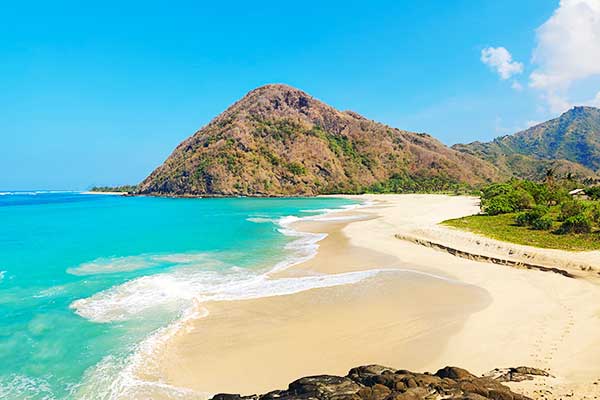
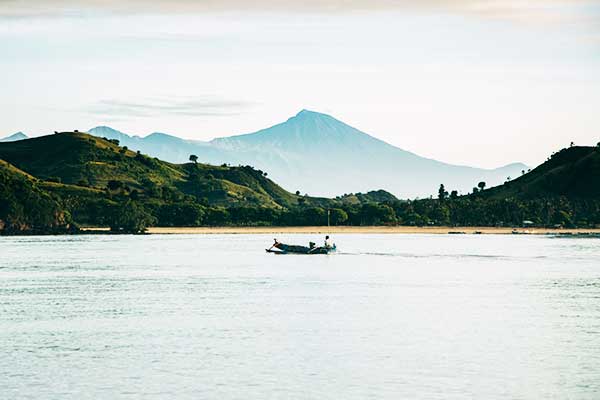
Left: Mount Rinjani's crater lake, 3,726m above sea level. Centre: Tanjung Aan beach near Kuta Lombok. Right: the dramatic southern coastline.
Why Lombok deserves more of your time
The south coast around Kuta Lombok — not to be confused with Kuta in Bali, which is chaotic and commercialised — is a string of pristine bays, each with water that shifts through improbable shades of green and blue. Tanjung Aan is a sweeping double bay with two distinctly different sides — one with powder-soft peppercorn sand, one with finer white sand — and water so turquoise it barely looks real. The road connecting these bays wanders over hills with views that have no equivalent in Bali.
The interior of the island is dominated by Mount Rinjani — Indonesia's second-highest active volcano at 3,726 metres. The multi-day trek to the crater lake and caldera is genuinely challenging and genuinely extraordinary. Rinjani's trekking trails are open from April through November, with May and June offering the sweet spot: perfect weather before peak-season crowds and prices hit in July and August.
How to Get from Bali to Lombok
- Direct flight (20–25 min)~$25–60 USD one way · Most practical option
- Fast boat (~2 hours)~$18–37 one way · Rough in wet season
- From Padang BaiDaily fast boats to Bangsal or Lembar Harbour
- Lombok airport (LOP)~30 min from Kuta Lombok · ~90 min from Senggigi
- Best base for beachesKuta Lombok (south)
- Best base for RinjaniSenaru or Sembalun (north)
The Gili Islands and Lombok: a natural combination
Most travellers treat the Gili Islands as a Bali side trip. The smarter approach is to combine them with Lombok: fly into Lombok, spend a few days in Kuta, take a boat up to the Gili Islands, then either fly back to Bali from Lombok or take the fast boat. This creates a more coherent trip and avoids the long crossing from Bali to the Gilis and back.
Going further: Komodo, Flores and beyond
If you have more than 10 days and want to go beyond the orbit of islands directly near Bali, two destinations deserve serious attention.
Komodo National Park
An hour's flight from Bali, the island of Komodo is dedicated to its namesake national park which spans woodland savannah, tropical rainforest and deciduous forest. Here, you'll find the Komodo dragon, the heaviest lizard in the world. Visitors can discover them in their natural habitat — hiking with a park ranger is compulsory — and can snorkel or dive around impressive marine life. It's not unusual to be shoulder to shoulder with sea turtles and dolphins. The diving in Komodo is among the best in the world. The famous Pink Beach — one of only a handful of pink-sand beaches on earth — is also worth the trip alone. Access is via Labuan Bajo on Flores island, which has a small airport with direct flights from Bali (~1h15).
Flores
Flores is the gateway to Komodo National Park, but it has plenty of attractions on its own. Its unique position within Indonesia's volcanic belt and tropical climate has shaped its terrain. There are multiple pristine lakes and 17 volcanoes on Flores — many hikers choose to tackle Mount Kelimutu where three colour-changing freshwater lakes reside. The lakes shift between shades of turquoise, green, black and red over months and years, driven by underwater volcanic activity. It's one of the most unusual natural phenomena in Southeast Asia.
Full comparison: all islands at a glance
| Island | Travel time from Bali | Cost (approx.) | Best for | Not ideal for |
|---|---|---|---|---|
| Nusa Penida | 45 min (fast boat) | $9–15 one way | Photography, diving, adventure Most dramatic | Relaxed beach holidays, families with young children |
| Nusa Lembongan | 30–45 min (fast boat) | $15–20 one way | Day trips, yoga, relaxed surf, couples | Big nightlife, dramatic scenery |
| Gili Trawangan | 1h45–2h30 (fast boat) | $18–43 one way | Nightlife, variety, social scene, diving Most popular | Quiet escapes, very young children |
| Gili Air | 1h45–2h30 (fast boat) | $18–43 one way | Couples, yoga, snorkelling, balance | Hardcore nightlife seekers |
| Gili Meno | 1h45–2h30 (fast boat) | $18–43 one way | Honeymooners, pure quiet, turtle snorkelling | Activities, restaurants, nightlife |
| Lombok | 20 min (flight) · 2h (boat) | $25–60 (flight) | Beaches, Rinjani trek, surf, authentic culture Most underrated | Nightlife, easy tourist infrastructure |
| Komodo / Flores | 1h15 (flight from Bali) | $50–120 return flight | Diving, Komodo dragons, Pink Beach, adventure | Short trips, limited budgets |
Practical information: boats, prices and when to go
Best time to visit the islands near Bali
Indonesia's dry season runs from May to October. For the islands near Bali, this is the optimal window — calm seas, low rainfall and reliable boat services. May, June, September, and October offer the best combination of good weather, calm seas, and manageable crowds. Avoid July and August if you dislike busy tourist spots — seas can be rough in the wet season (December–March) and some services are disrupted.
Boat safety
Indonesia has had incidents with fast boat operators. Always choose established companies, check for life jackets on board, and avoid operators offering prices dramatically below market rate. For Nusa Penida, reputable operators include Rocky Fast Cruise, Maruti Express, and Angel Billabong. For the Gilis, 12Go Asia aggregates multiple operators with verified reviews and allows advance booking.
Money
Indonesia runs on cash for most island-based transactions. ATMs are available on Bali and Lombok; scarce on Nusa Penida and Gili Trawangan; essentially non-existent on Gili Meno, Gili Air and Nusa Lembongan in reliable form. Withdraw sufficient rupiah in Bali before crossing. The exchange rate from Bali ATMs is generally better than currency exchange desks. Bring small denomination notes (50,000 and 100,000 IDR) — entrance fees and small restaurants rarely have change for 500,000 notes.
Indonesia has 17,000 islands. Most visitors see two or three. If you've been to Bali before, the question is no longer whether to leave — it's only which direction to go first. Travel notes, June 2026