How to choose the right bamboo forest in Kyoto
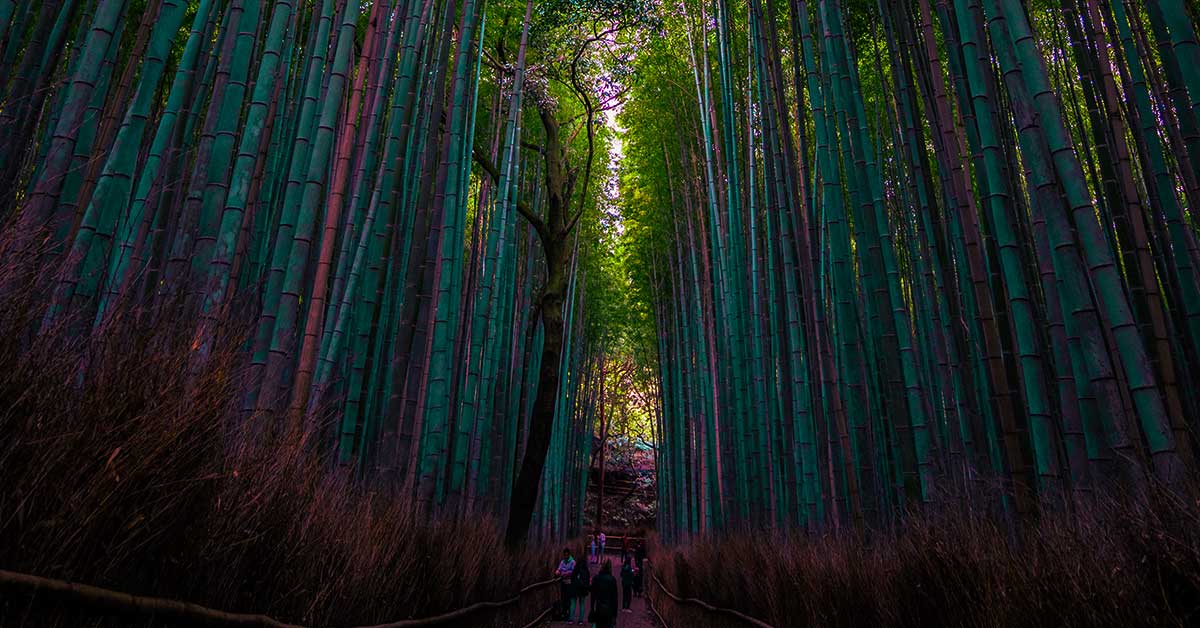
There is a reason the Arashiyama Bamboo Grove appears in almost every first-time Kyoto itinerary. The towering stalks, narrow path and filtered green light create exactly the kind of landscape people imagine when they picture Japan. The problem is that the experience changes dramatically depending on when you go — and there is much more bamboo in Kyoto than the famous path.
Kyoto's Nishikyo district is one of the city's major bamboo-growing areas, and the official Kyoto tourism guide highlights several less-visited landscapes there. The area includes Rakusai Bamboo Park, the 1.8 km Take no Michi, and Jizo-in, a temple surrounded by bamboo. :contentReference[oaicite:2]{index=2}
Here's the honest framework for choosing:
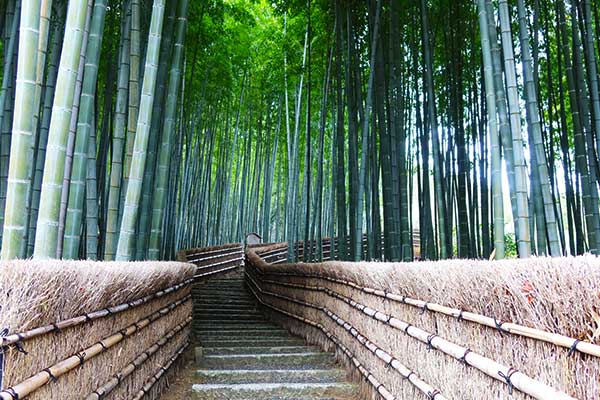
Saga-Arashiyama · Free
Arashiyama
The iconic Kyoto bamboo experience. Go for the classic photographs and the atmosphere — but arrive early if you want to avoid the busiest periods.
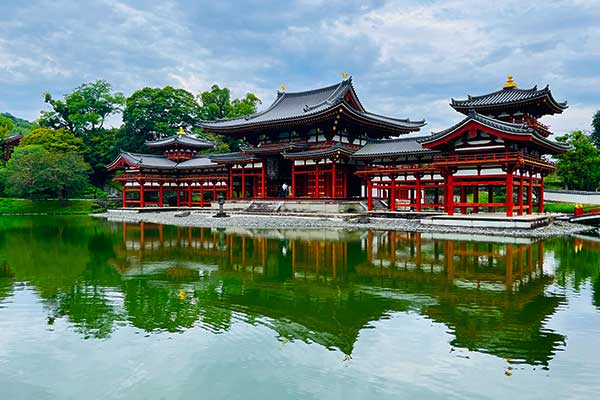
Kamikatsura · Temple visit
Jizo-in
Known as the Temple of Bamboo, Jizo-in combines a beautiful bamboo setting with a traditional Zen temple and moss garden.
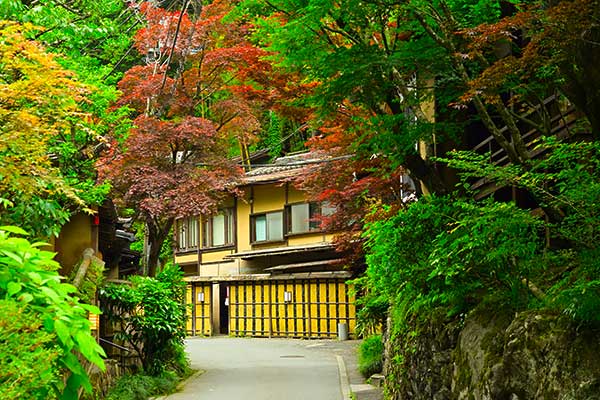
Nishikyo · 1.8 km
Take no Michi
A long, beautifully maintained bamboo path lined with distinctive bamboo fences. A completely different experience from the compact Arashiyama grove.
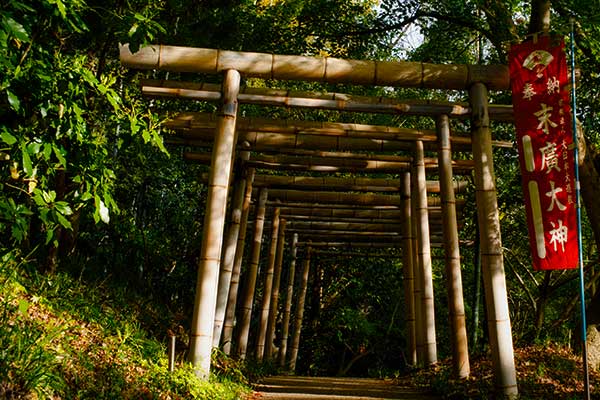
Nishikyo · Bamboo museum
Rakusai Bamboo Park
More than just a bamboo photo stop. The park has a bamboo museum and around 110 varieties of bamboo, making it ideal for travellers who want context as well as scenery.
Arashiyama Bamboo Grove — the famous one
Let's start with the obvious one. The Arashiyama Bamboo Grove is famous for a reason. Walking beneath the tall, tightly packed bamboo stalks is visually extraordinary, particularly when sunlight filters through the canopy and creates layers of green and shadow.
The grove forms part of the much larger Saga-Arashiyama area, where you can combine bamboo with Tenryu-ji Temple, Togetsukyo Bridge, Kameyama Park and the quieter streets of Saga. Kyoto's official tourism guide describes Arashiyama as one of the city's most popular sightseeing areas, and it specifically recommends going early in the morning when fewer people are around. :contentReference[oaicite:3]{index=3}
And that's the biggest thing to understand before you visit: Arashiyama is not a secret anymore. During busy periods, the path can become crowded enough that the quiet, mysterious atmosphere you see in photographs is difficult to reproduce.
The Arashiyama reality
Don't plan your visit around getting an empty photograph in the middle of the day. Instead, arrive early, accept that other visitors will be there, and explore the surrounding Saga-Arashiyama area afterwards. Kyoto also provides congestion forecasts and live camera information for the Bamboo Grove, which can be useful before setting out.
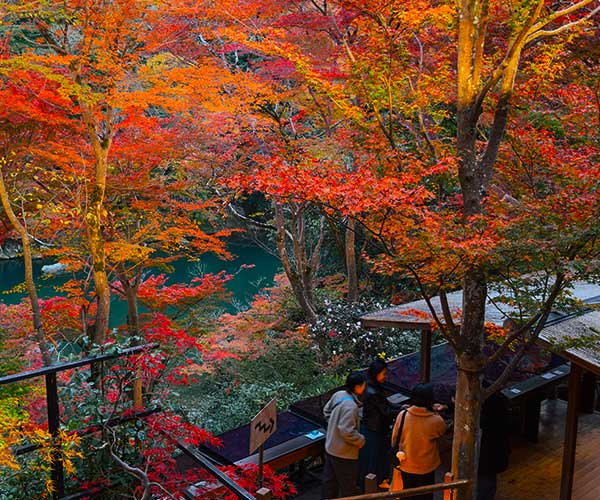
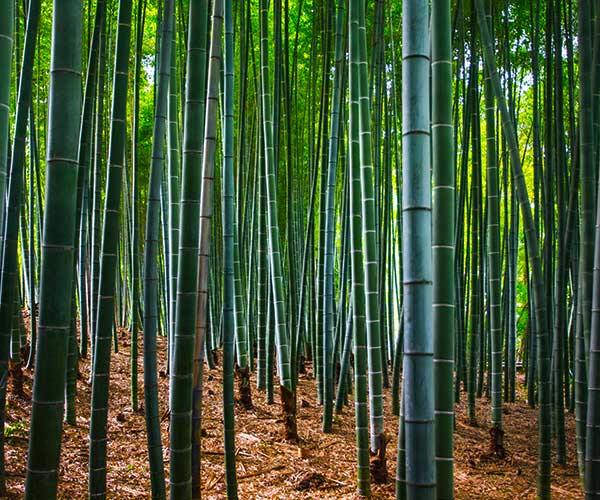
Arashiyama's Bamboo Grove is one of Kyoto's most recognisable landscapes — beautiful, but very popular.
How to make Arashiyama better
My preferred strategy is to treat the bamboo grove as the beginning of the morning rather than the entire destination. Arrive early, walk through the grove, continue towards Tenryu-ji or Kameyama Park, and then explore further into Saga.
The official Kyoto guide even recommends approaching the Bamboo Grove through Kameyama Park, which can provide a relatively quieter route into the area. :contentReference[oaicite:4]{index=4}
Arashiyama — Key Facts
- LocationSaga-Arashiyama, western Kyoto
- EntranceFree to walk through the grove
- Best timeEarly morning
- Time needed30–60 min for the grove itself
- Combine withTenryu-ji · Kameyama Park · Togetsukyo Bridge
- CrowdsHigh at popular times
Jizo-in — Kyoto's Temple of Bamboo
If Arashiyama is the bamboo forest everyone knows, Jizo-in is the bamboo experience for travellers who want something quieter and more contemplative.
Jizo-in is often called the Temple of Bamboo because bamboo grows throughout much of its grounds. The temple is in the Nishikyo area, around a short bus journey from Arashiyama, and combines bamboo groves with a traditional Japanese garden covered in moss.
The Kyoto City tourism information describes the temple as being surrounded by bamboo and notes its garden, including the Sixteen Rakan garden. The temple was founded by Hosokawa Yoriyuki during the Muromachi period and has a long connection with Kyoto's Zen history. :contentReference[oaicite:5]{index=5}
This is not the place to visit if your only objective is to recreate the famous Arashiyama bamboo photograph. The appeal is subtler: bamboo, moss, stone, architecture and silence working together as one landscape.
Good to Know
Jizo-in has specific closing days and seasonal opening arrangements, so check the official information before making a special trip. The Kyoto City listing currently gives regular visiting hours of 9:00–16:00, with the temple closing at 16:30, but closures can vary for holidays, ceremonies, weather and maintenance.
Take no Michi — the 1.8 km Bamboo Path
Take no Michi is the discovery that changes the entire “Kyoto only has Arashiyama” narrative.
Located in Nishikyo, the path runs for approximately 1.8 kilometres through one of Kyoto's major bamboo-growing areas. Instead of the compact tourist corridor found in Arashiyama, you get a longer landscape of bamboo groves, carefully constructed bamboo fences and a path that feels much more connected to the surrounding countryside.
Kyoto's official tourism information describes the Nishikyo area as one of the city's densest bamboo-growing regions and specifically highlights the 1.8 km path in front of Rakusai Bamboo Park. The route is used both for walking and cycling. :contentReference[oaicite:6]{index=6}
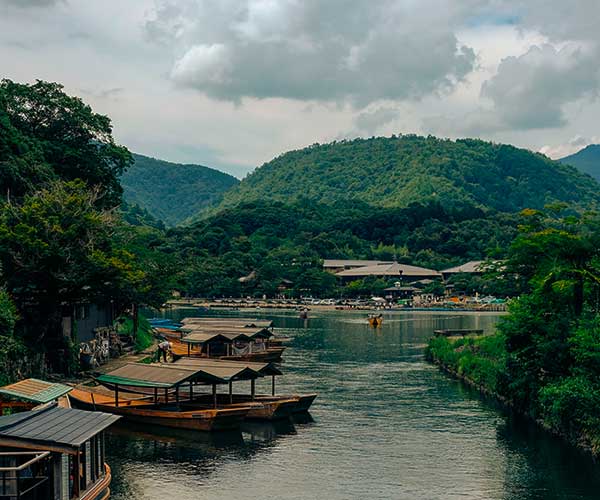
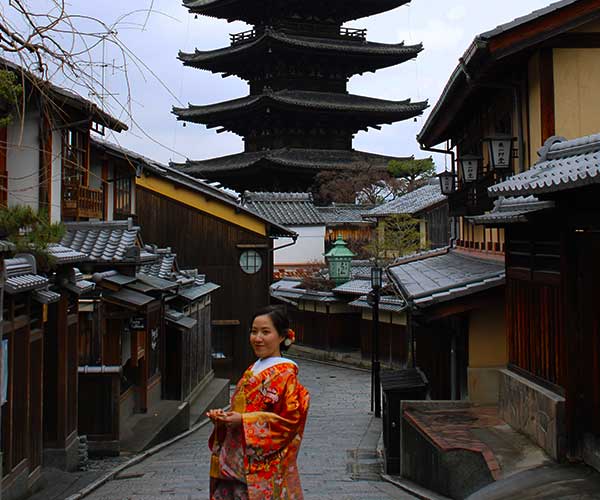
Take no Michi stretches for approximately 1.8 km and is designed as a walking and cycling route through Kyoto's bamboo-growing countryside.
One of the biggest advantages is that the experience is not built around a single famous photograph. You can slow down, look at the different bamboo fence designs and appreciate the landscape rather than simply walking through a queue of people.
If you have already visited Arashiyama and want to see another side of Kyoto's relationship with bamboo, this is the place I would put high on the list.
Take no Michi — Key Facts
- LocationNishikyo, western Kyoto
- LengthApproximately 1.8 km
- Best forWalking · cycling · photography
- AtmosphereMore local and spacious
- NearbyRakusai Bamboo Park
- Getting thereHankyu Railway + local transport
Rakusai Bamboo Park — bamboo beyond the postcard
Rakusai Bamboo Park is where you go when you want to understand why bamboo matters to Kyoto rather than simply photograph it.
The park is home to a bamboo museum and garden containing approximately 110 varieties of bamboo and bamboo grass. Kyoto's official tourism guide describes it as the only museum in Japan dedicated to bamboo and notes that the park is free to enter. :contentReference[oaicite:7]{index=7}
Inside the park, paths wind through different varieties of bamboo, while the surrounding Nishikyo landscape gives you a much broader sense of the region's agricultural and cultural relationship with the plant.
There is also a fascinating historical connection: the museum displays information and objects related to bamboo craftsmanship, including a reproduction of the bamboo filament associated with Thomas Edison's early light bulb experiments. :contentReference[oaicite:8]{index=8}
My tip
Don't visit Rakusai Bamboo Park in isolation. Combine it with Take no Michi. The two experiences complement each other: the park gives you context and variety, while the path gives you the feeling of walking through a real bamboo-growing landscape.
Oharano's quieter bamboo paths
For travellers who really want to get away from Kyoto's most photographed places, the Oharano area in Nishikyo is worth exploring.
The western edge of Kyoto becomes much more rural here, with bamboo groves, agricultural land, temples and shrines spread beneath the Nishiyama mountains. The area is particularly associated with Kyoto-grown bamboo and traditional agriculture.
One lesser-known path runs near the northern approach to Oharano Shrine. Kyoto's official itinerary describes this as a picturesque bamboo forest that is known mainly to locals and can be considerably quieter than Arashiyama. Visitors are asked to walk quietly and respect the residential surroundings. :contentReference[oaicite:9]{index=9}
This is not a conventional attraction with a ticket booth and a large entrance sign. That's precisely why it appeals to independent travellers — but it also means you should treat the area as a living neighbourhood rather than a photo set.
Respect the neighbourhood
Quiet bamboo paths are often surrounded by residential and agricultural areas. Keep noise low, stay on public paths, don't enter private land and avoid blocking roads while taking photographs. The fact that a place is less touristy does not mean it is public space.
Saga Toriimoto and the bamboo landscapes beyond Arashiyama
One of my favourite ways to experience Kyoto's bamboo is not to chase a single “forest” at all, but to walk deeper into the Saga area after visiting Arashiyama.
Continue north towards Saga Toriimoto and the preserved historic streets, where traditional houses, temples, forested hills and bamboo landscapes create a completely different atmosphere from the central Arashiyama corridor.
Adashino Nenbutsu-ji is particularly interesting. The temple is known for its thousands of Buddhist stone statues, but the wider Saga Toriimoto area is also valuable for its quieter historical atmosphere. Kyoto's official tourism information places Adashino Nenbutsu-ji around a 30-minute walk from Saga-Arashiyama Station. :contentReference[oaicite:10]{index=10}
From here, you can continue towards Otagi Nenbutsu-ji and the deeper part of the Saga area. This is not the shortest way to see bamboo, but it is one of the most rewarding ways to turn an Arashiyama visit into a much broader day of walking.
Why I prefer this over simply leaving after the Bamboo Grove
Arashiyama can feel intensely tourist-oriented around the famous grove. A little further north, the rhythm changes. The streets become quieter, the historic landscape becomes more apparent and you start seeing why Kyoto's western hills have attracted temples, artists and residents for centuries.
If you have half a day rather than just an hour, this is the route I would choose.
Full comparison: Kyoto's bamboo forests at a glance
| Place | Area | Best for | Time needed | Main trade-off |
|---|---|---|---|---|
| Arashiyama Bamboo Grove | Saga-Arashiyama | First visit, iconic photography Classic | 30–60 min | Very popular |
| Jizo-in | Nishikyo | Temple gardens, bamboo, quiet atmosphere | 45–60 min | Requires a separate temple visit |
| Take no Michi | Nishikyo | Long walks, cycling, bamboo fences Quieter | 1–2 hours | Further from central Kyoto |
| Rakusai Bamboo Park | Nishikyo | Bamboo varieties, culture, photography | 45–90 min | Less dramatic than Arashiyama |
| Oharano Bamboo Paths | Oharano | Quiet countryside, local atmosphere | 1–2 hours | Less straightforward for first-time visitors |
| Saga Toriimoto | Northwest Kyoto | Historic streets, temples, forest landscapes | 2–4 hours | More walking required |
Practical information: timing, transport and etiquette
What is the best time to visit Kyoto's bamboo forests?
Bamboo is one of the easiest natural attractions in Kyoto to enjoy year-round because the groves remain green through every season. Each season changes the atmosphere rather than removing the attraction entirely.
Spring brings fresh greenery and can be combined with cherry blossoms. Summer gives you the deepest green tones and cool shade beneath the bamboo. Autumn adds contrast from surrounding maple foliage, while winter can offer colder, quieter mornings and particularly clean light.
For Arashiyama specifically, the bigger consideration is not the season but the time of day. Kyoto's official tourism guidance recommends early morning visits, and the city now provides congestion forecasts and live cameras for popular areas including the Bamboo Grove. :contentReference[oaicite:11]{index=11}
How early should you arrive at Arashiyama?
If your priority is atmosphere and photography, go as early as your itinerary allows. I would rather arrive early and have coffee afterwards than arrive at midday expecting an empty bamboo path.
There is no magic hour that guarantees an empty grove. Weekends, holidays and peak seasons can all change the experience. The official congestion tools are more useful than relying on a generic “go at 7 AM” rule.
How to get to Arashiyama
From Kyoto Station, one of the standard options is the JR Sagano Line to Saga-Arashiyama Station. Kyoto's official tourism guide also outlines alternative routes using the subway and Randen railway to help distribute visitor traffic. :contentReference[oaicite:12]{index=12}
Once you arrive, walking is the easiest way to explore the area. Don't underestimate the distance if you plan to continue towards Saga Toriimoto and the temples beyond the main grove.
How to get to Nishikyo and the bamboo paths
The Nishikyo area is easily reached from central Kyoto by Hankyu Railway. Kyoto's official tourism information highlights Rakusai-guchi Station as an access point, with bicycle rental available nearby. From Rakusai-guchi, the Bamboo Park can be reached by bicycle in roughly 10 minutes. :contentReference[oaicite:13]{index=13}
If you're comfortable cycling, Nishikyo is particularly well suited to it. The 1.8 km bamboo path and surrounding countryside make much more sense as part of a slower half-day than as a rushed checklist stop.
What should you bring?
Kyoto Bamboo Forest Checklist
- ShoesComfortable walking shoes
- CameraWide-angle lens or phone camera
- WaterEspecially in summer
- Weather layerLight rain jacket in wet weather
- TransportIC card for trains and buses
- Best extraEnough time to explore beyond the main path
Bamboo etiquette matters
There is one rule that should not be treated as optional: do not carve, scratch or write on the bamboo. Kyoto has specifically warned visitors about increasing incidents of graffiti carved into bamboo stalks. Damaged stalks can decay and have to be removed, permanently affecting the landscape. The city notes that carving bamboo can constitute property damage and may result in legal penalties. :contentReference[oaicite:14]{index=14}
Stay on designated paths, don't climb fences, don't touch private property and keep voices low in temple and residential areas. The best bamboo photographs are not worth damaging the landscape that made them possible.
Kyoto's most famous bamboo grove is worth seeing. But the real surprise is discovering that bamboo is not a backdrop here — it is part of the landscape, culture and everyday life far beyond Arashiyama. Travel notes, September 2026