How to choose the right Kyoto garden
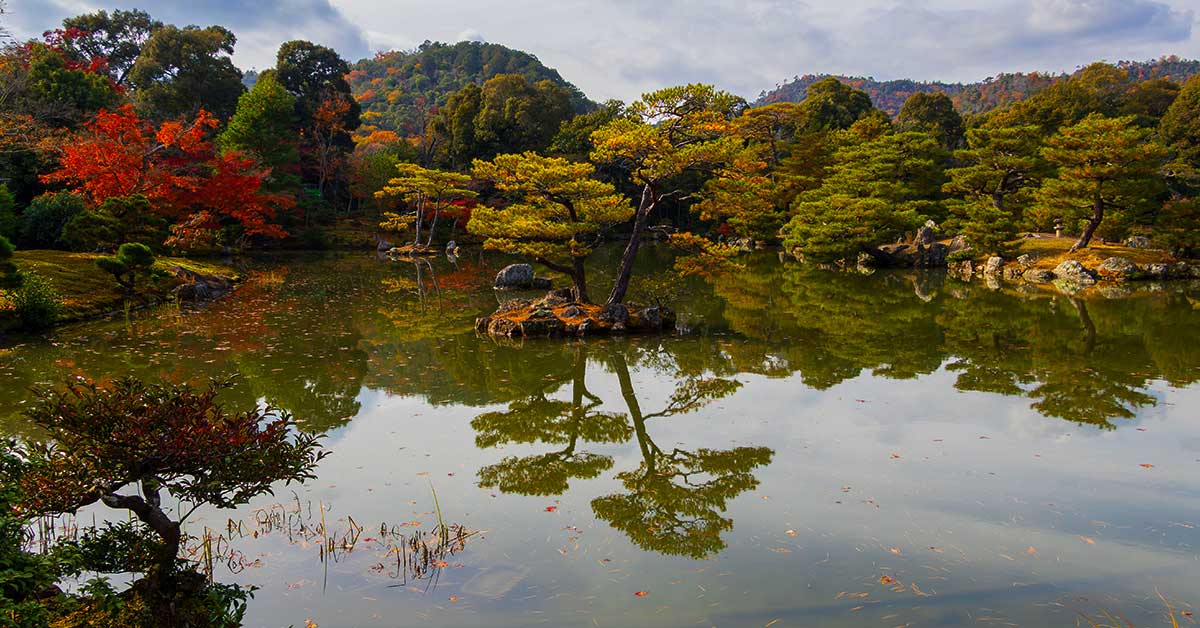
Kyoto's gardens are not all trying to achieve the same thing. Some are deliberately minimal, asking you to sit and observe. Others are designed as landscapes to walk through, with ponds, bridges, streams, moss, trees and changing viewpoints. Some are attached to famous temples and therefore attract large numbers of visitors; others are much easier to experience at a slower pace.
Kyoto's tourism authorities broadly describe two major garden traditions: pond-style gardens and dry landscape gardens, known as karesansui. Understanding that difference makes it much easier to decide which places deserve space in your itinerary.
Zen · Dry landscape · ~45–60 min
Ryoan-ji
The garden to visit if you want to understand the visual language of Japanese Zen gardens: rocks, gravel, empty space and deliberate asymmetry.
Temple garden · Eastern Kyoto · ~60–90 min
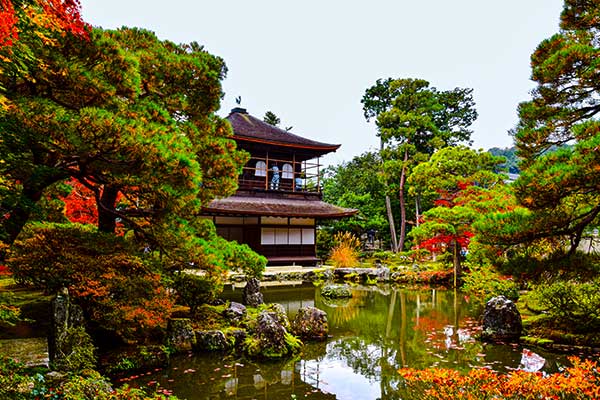
Ginkaku-ji
A layered garden where sand, moss, water, trees and mountain scenery work together around the famous Silver Pavilion.
Naturalistic · Okazaki · ~45–75 min
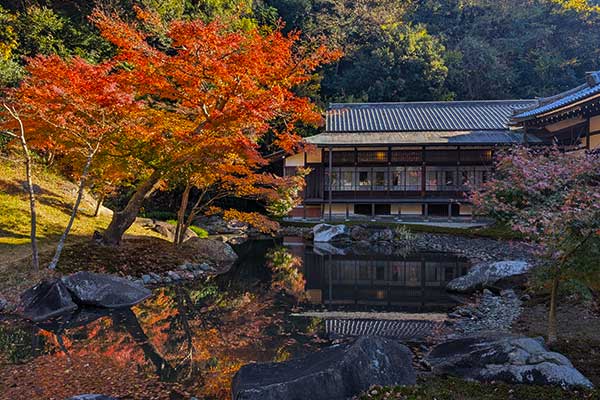
Murin-an
A more modern interpretation of the Japanese garden, with a stream running through a landscape inspired by a mountain village.
Imperial villa · North-east Kyoto · 2–3 hr
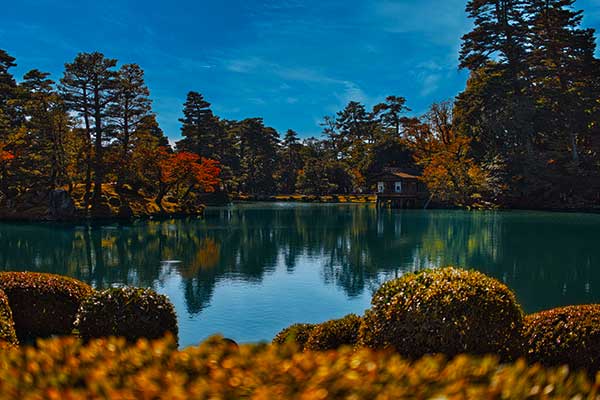
Shugakuin Imperial Villa
Three expansive garden areas, ponds, tea houses and views extending towards the surrounding mountains. This is Kyoto gardening on a much larger scale.
Ryoan-ji — Kyoto's iconic Zen rock garden
Ryoan-ji is the garden most people picture when they hear the words “Japanese Zen garden.” Fifteen carefully arranged rocks sit within a rectangular sea of white gravel, enclosed by an earthen wall. The composition is deliberately restrained, with almost no conventional planting inside the main garden.
The strange detail is that you cannot see all fifteen rocks from a single position. From the viewing platform, at least one is always hidden behind another. There is no universally accepted explanation for what the arrangement represents, and the uncertainty is part of what makes the garden so compelling.
Don't rush this garden
Ryoan-ji is often treated as a quick photo stop between Kinkaku-ji and Arashiyama. That misses much of the point. If you can, sit for several minutes and look at the composition rather than taking one photograph and immediately leaving.
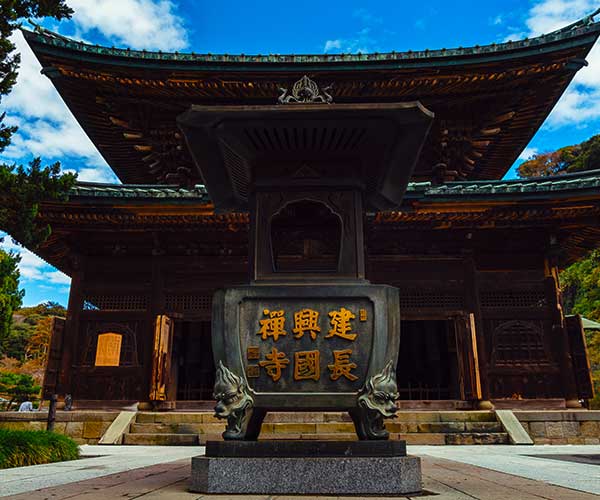
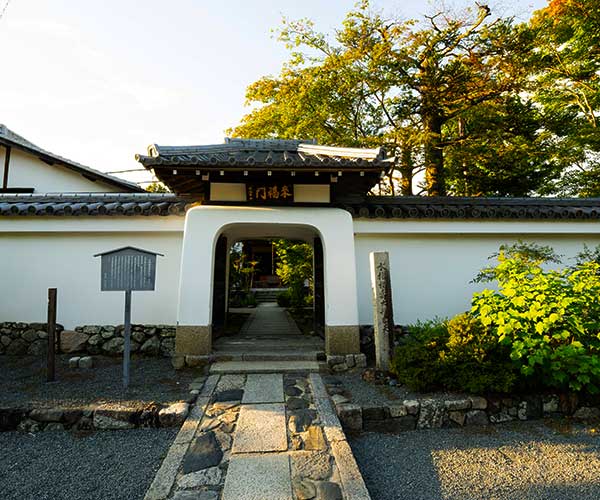
The simplicity of Ryoan-ji is intentional: fifteen rocks, white gravel and an earthen wall create an unusually powerful composition.
What else to see at Ryoan-ji
The famous rock garden is only part of the temple grounds. Beyond the main viewing area, Ryoan-ji has larger gardens containing trees, moss and Kyoyo-chi pond. The atmosphere changes significantly as you walk away from the rock garden, particularly in autumn when the surrounding vegetation adds colour to the landscape.
Ryoan-ji — Key Facts
- Garden styleDry landscape / karesansui
- Best forZen design · Architecture · Photography
- LocationWestern Kyoto · Kinugasa
- Time to allow45–60 minutes
- NearbyKinkaku-ji · Ninna-ji
- Worth knowingThe main garden has 15 rocks, but never all visible at once
Ginkaku-ji — refined gardens around the Silver Pavilion
Ginkaku-ji, officially Jisho-ji, is very different from Ryoan-ji. Rather than one concentrated composition, its garden unfolds as you walk. There is a distinctive dry sand garden, moss-covered areas, ponds, trees and a path that climbs slightly into the hillside, revealing different views of the pavilion and surrounding grounds.
The temple began as a retirement villa for shogun Ashikaga Yoshimasa in the Muromachi period. Although it is known internationally as the “Silver Pavilion”, the building was never actually covered in silver. Its understated appearance is very much part of the aesthetic of the site.
The garden is particularly rewarding if you enjoy the relationship between architecture and landscape. The pavilion is not simply placed inside a garden; the paths and viewpoints repeatedly frame it as part of the composition.
Good to Know
Ginkaku-ji works especially well with the Philosopher's Path. Rather than treating the temple as an isolated stop, allow time to walk the surrounding eastern Kyoto neighbourhood afterwards.
Why Ginkaku-ji feels different from Ryoan-ji
Ryoan-ji asks you to contemplate a fixed composition. Ginkaku-ji encourages movement. The garden changes as you walk, with moss, water, sand and vegetation appearing from different angles. If you only have time for one type of Japanese garden, the contrast between these two sites is useful to understand.
Murin-an — flowing water, moss and a naturalistic landscape
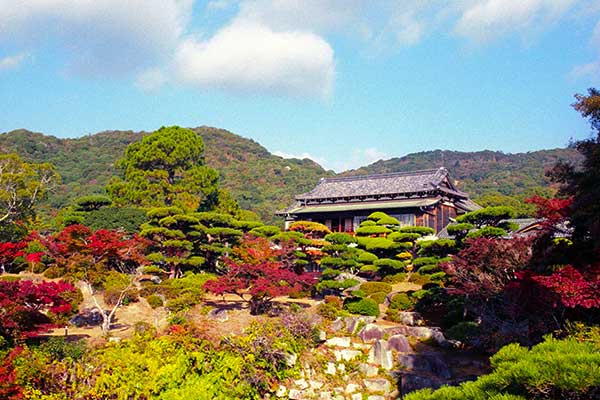
Murin-an is one of the gardens I would add to a Kyoto itinerary when you want something that feels less monumental. The villa was built between 1894 and 1896 for Yamagata Aritomo, a politician active during Japan's late nineteenth-century modernization. Its garden represents a different vision from the older dry landscapes: instead of relying on abstract gravel and rock compositions, it creates the feeling of a natural mountain landscape.
The central feature is a dynamic stream that runs through the garden like a natural brook. Moss, trees and carefully shaped terrain make the garden feel surprisingly organic, even though every part of it has been deliberately composed.
That balance between control and apparent spontaneity is what makes Murin-an interesting. It doesn't immediately announce itself as a “garden” in the same graphic way as Ryoan-ji. You walk through it and gradually notice how precisely everything has been arranged.
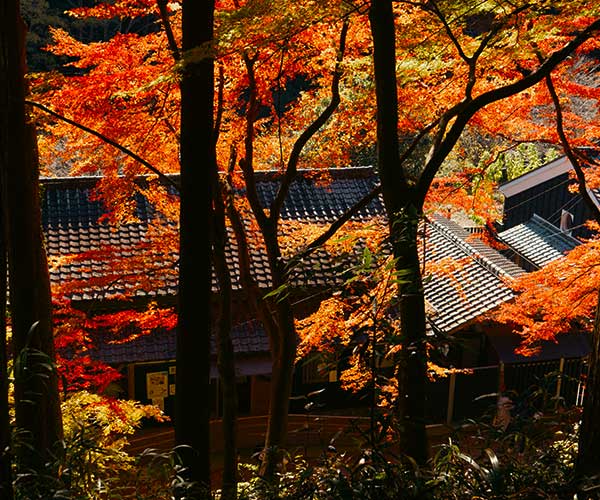
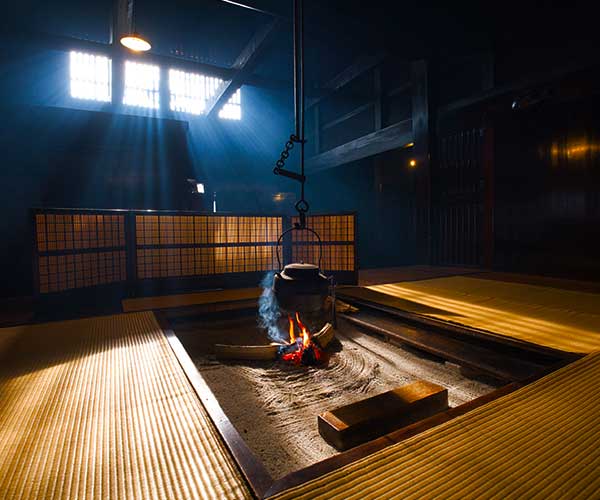
Murin-an uses water, moss and borrowed mountain scenery to create the feeling of a landscape rather than a static garden composition.
A garden worth slowing down for
Murin-an is in the Nanzen-ji and Okazaki area, making it relatively easy to combine with other eastern Kyoto sights. The garden is also notable because Kyoto Travel describes it as the only garden among the nearby cluster of garden villas that is open to the public throughout the year.
Murin-an — Key Facts
- Garden styleNaturalistic pond-and-stream landscape
- LocationNanzen-ji / Okazaki area
- Best forMoss · Water · Quiet observation
- Time to allow45–75 minutes
- Extra experienceGuided garden tours and tea experiences may be available
- NearbyNanzen-ji · Philosopher's Path · Heian-jingu
Shugakuin Imperial Villa — gardens on a grand scale
Shugakuin Imperial Villa is the garden to choose when you want to understand just how expansive Japanese landscape design can become. The grounds are divided into three large garden areas — upper, middle and lower — each with its own character, ponds and tea houses.
The villa was developed as an imperial retreat and was completed in the seventeenth century. What makes it extraordinary is not a single famous garden feature but the way the entire landscape works together. Ponds, paths, buildings and distant mountains become part of the same composition.
This is also a garden where shakkei, or borrowed scenery, becomes particularly apparent. The surrounding mountains are not simply a backdrop; they visually extend the garden beyond its physical boundaries.
Plan ahead
Shugakuin Imperial Villa requires advance reservation arrangements. Do not build it into a tightly scheduled Kyoto day without checking the current official visitor information first.
How much time should you allow?
This is not a garden to squeeze into a 30-minute gap. The grounds are extensive and the experience involves walking between the different garden areas. Allow roughly two to three hours including access and the visit itself, and wear comfortable shoes.
Shosei-en — a beautiful garden near Kyoto Station
Shosei-en is one of the easiest gardens to overlook simply because of its location. It sits within walking distance of Kyoto Station, making it a practical choice when you have a few hours before a train, have just arrived in the city, or want to add a garden without travelling across Kyoto.
The garden was designed at the request of Sen-nyo, a priest of Higashi-Hongan-ji Temple. It is particularly seasonal: plum and cherry blossoms appear in spring, irises and water lilies in summer, and maple leaves add colour in autumn.
Its accessibility is the real advantage. You don't need to dedicate an entire half-day to a distant temple complex to see a carefully designed Kyoto garden.
Best for a Short Kyoto Stop
If your itinerary is already full, Shosei-en is one of the gardens that makes sense logistically. Pair it with Higashi Hongan-ji and Kyoto Station rather than crossing the city specifically for it.
Kyoto Gyoen — the city's enormous public garden
Kyoto Gyoen is completely different from the temple gardens on this list. It is an enormous public green space surrounding Kyoto Imperial Palace and several other historic sites. The national garden measures approximately 700 metres east to west and 1,300 metres north to south.
There are lawns, plum groves, mature trees, historic sites and quieter paths, making it much more suitable for an unstructured walk than a formal garden visit. Entry to the garden itself is free.
This is the place to come when you want greenery without a fixed sightseeing checklist. You can walk, sit under the trees, explore the historic surroundings and then continue towards the Imperial Palace.
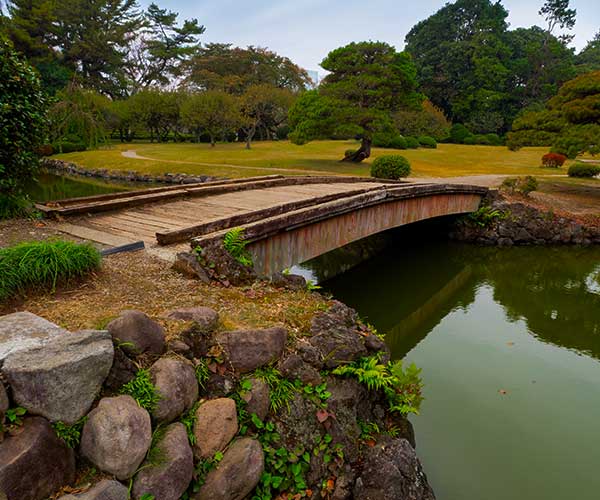
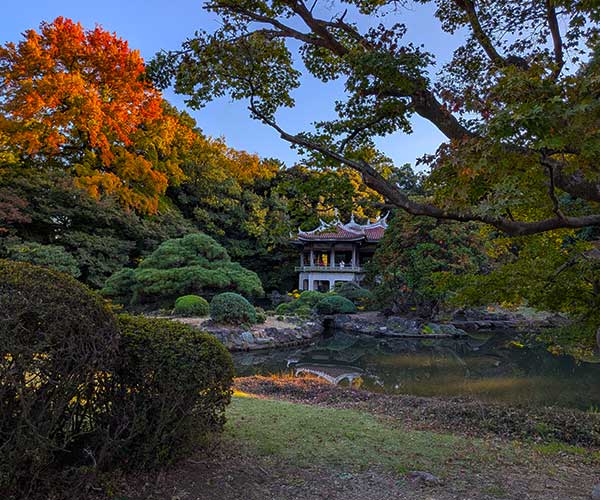
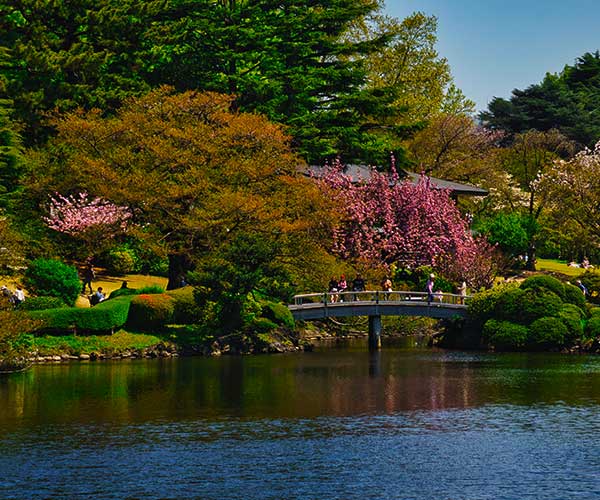
Kyoto Gyoen is less formal than the famous temple gardens, but its enormous scale makes it one of the city's easiest places to slow down outdoors.
Why visit Kyoto Gyoen?
The freedom is the point. There is no single viewpoint you need to find and no famous composition you have to photograph. It works particularly well early in the morning, between sightseeing stops, or when you simply want a break from Kyoto's busiest temple corridors.
Kyoto Gyoen — Key Facts
- TypeLarge public national garden
- AdmissionFree entry to the garden
- LocationCentral Kyoto · around Kyoto Imperial Palace
- Best forWalking · Nature · Historic surroundings
- ScaleApprox. 700 m × 1,300 m
- Time to allow1–2 hours, depending on how much you explore
Nijo-jo Castle — gardens, ponds and seasonal colour
Nijo-jo Castle is better known for its political history and architecture, but its gardens deserve their own attention. The castle complex combines historic buildings with landscaped grounds, ponds, stone arrangements and seasonal planting.
It is a useful choice if you want to combine garden viewing with one of Kyoto's major historic sites rather than spending an entire visit focused on garden design. The atmosphere changes considerably through the seasons, and autumn colour can transform the relationship between the buildings and surrounding vegetation.
For photographers, Nijo-jo is particularly interesting because the formal architecture provides a strong contrast with the softer garden landscape. Instead of photographing the garden in isolation, look for compositions where roofs, walls, bridges, water and trees overlap.
Pair It With History
Nijo-jo works best as part of a broader historical morning or afternoon. The garden is one layer of a much larger site rather than the sole reason to visit.
Full comparison: Kyoto gardens at a glance
| Garden | Area | Time needed | Best for | What to expect |
|---|---|---|---|---|
| Ryoan-ji | Western Kyoto | 45–60 min | Zen, rock gardens, contemplation Iconic | Dry landscape garden, famous rock composition |
| Ginkaku-ji | Eastern Kyoto | 60–90 min | Landscape design, moss, temple architecture | Walking garden with sand, ponds, moss and hillside views |
| Murin-an | Okazaki | 45–75 min | Water, moss, naturalistic landscapes Intimate | Stream, trees and mountain-village-inspired scenery |
| Shugakuin Imperial Villa | Northeast Kyoto | 2–3 hours | Large-scale gardens, history, mountain views | Three garden areas with ponds, tea houses and borrowed scenery |
| Shosei-en | Near Kyoto Station | 45–75 min | Seasonal flowers, convenient sightseeing | Compact garden with seasonal planting and water features |
| Kyoto Gyoen | Central Kyoto | 1–2 hours | Walking, nature, open space Free | Large public garden surrounding Kyoto Imperial Palace |
| Nijo-jo Castle | Central Kyoto | 1.5–2.5 hours | Gardens plus history and architecture | Ponds, landscaped grounds and historic castle buildings |
Practical information: seasons, crowds and etiquette
Best time to visit Kyoto gardens
There is no single perfect season. Kyoto's gardens are deliberately designed to change throughout the year, and each season emphasizes different elements.
Spring brings plum and cherry blossoms, although the most famous flowering periods can also mean very high visitor numbers. Summer is intensely green, with moss, foliage, irises and water lilies becoming particularly prominent. Autumn is the most famous season for maple colour and can transform even a restrained garden into a vivid landscape. Winter is quieter and often reveals the underlying structure of gardens more clearly, although some seasonal attractions and facilities have different schedules.
Go early if you want a calmer experience
Kyoto's most famous gardens can become busy, particularly during cherry blossom and autumn foliage periods. Early morning is generally the most useful strategy if photography and atmosphere matter to you.
There is also an important distinction between “quiet” and “empty”. No popular Kyoto garden can realistically guarantee that you will have it to yourself. Even the less-visited gardens can become busy during peak seasonal periods.
How to get around Kyoto's gardens
Kyoto's gardens are spread across the city, so trying to visit all of them in one day is inefficient. Group them geographically instead.
For eastern Kyoto, Ginkaku-ji, the Philosopher's Path, Nanzen-ji and Murin-an can form a natural sightseeing area. In western Kyoto, Ryoan-ji can be combined with Kinkaku-ji and Ninna-ji. Central Kyoto works well for Kyoto Gyoen, Kyoto Imperial Palace and Nijo-jo Castle. Shugakuin requires more dedicated planning because it is farther north and the visit is reservation-based.
Kyoto Garden Planning — Quick Guide
- For a first visitRyoan-ji + Ginkaku-ji
- For moss and waterMurin-an + Ginkaku-ji
- For a large landscapeShugakuin Imperial Villa
- Near Kyoto StationShosei-en
- Free outdoor spaceKyoto Gyoen
- Best strategyGroup gardens by area rather than crossing the city repeatedly
Garden etiquette
Kyoto's gardens are living cultural sites, not simply photo locations. Stay on designated paths, don't step onto moss or planted areas, and avoid touching rocks, trees or garden features. At temple gardens, keep conversations quiet and follow photography rules.
Most importantly, don't turn a contemplative garden into a photoshoot that blocks everyone else's view. Take your photograph, then move aside. At the most famous gardens, this small gesture makes a noticeable difference.
The most beautiful thing about Kyoto's gardens is not any single tree, stone or pond. It is the way everything has been arranged so that you notice the relationship between them. Travel notes, September 2026